
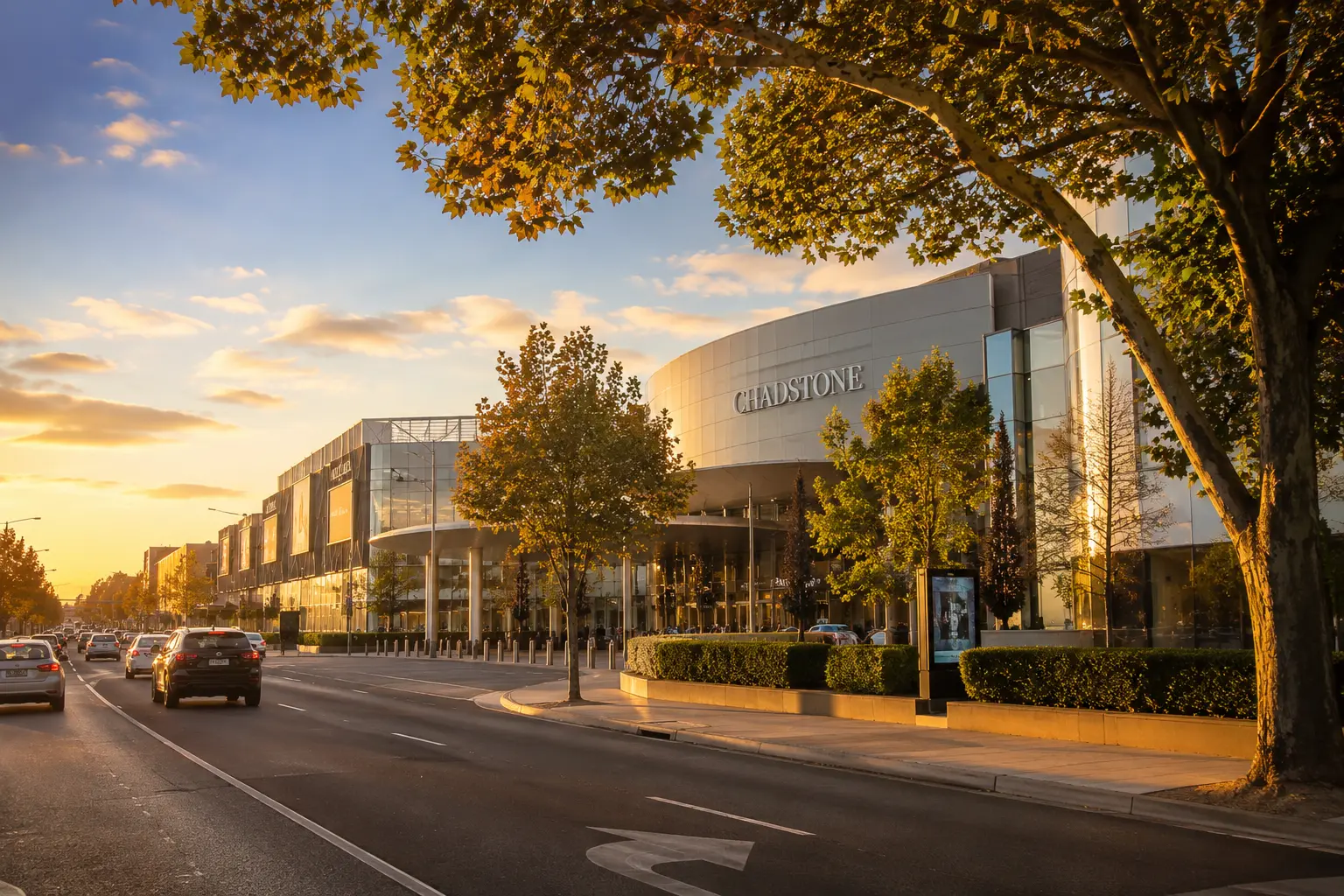
The Chadstone Lesson: What 40 Years of Compounding Looks Like in Bricks and Mortar
A $37 million purchase. A $6.7 billion asset. And the principles behind it that anyone can apply.
There is a shopping centre in Melbourne’s south-east that most Australians know simply as “Chaddy.” But behind the brand names, the food courts, and the weekend crowds lies one of the most instructive wealth-building case studies this country has ever produced. Not because it is glamorous. But because it is undeniable.
This is the story of Chadstone Shopping Centre — and more importantly, it is the story of what time, quality assets, and compounding can do to wealth. By the end of this article, you will understand why the principles at work here apply far beyond a single iconic building, and what you can take from them right now.
From paddocks to Australia’s most valuable retail asset
Cast your mind back to 1958. The land where Chadstone now stands was open paddocks — former grazing ground for the Convent of the Good Shepherd. Chadstone Shopping Centre opened on 3 October 1960, built by the Myer Emporium at a cost of £6 million. It was Australia’s first self-contained regional mall: 73 stores, an open-air layout, a radio studio, a bowling alley. Useful. Functional. Unremarkable by today’s standards.
The Gandel Group purchased the centre for $37 million in 1983, acquiring what was already a growing but still modest suburban shopping complex. At the time, few outside the property world would have looked twice.
Fast forward to today. Chadstone is Australia’s largest and most valuable shopping asset, attracting over 24 million people annually and generating over $2 billion in annual retail turnover. The asset that changed hands for $37 million in 1983 is now valued at approximately $6.7 billion.
Let that land. $37 million to over $6.7 billion. In roughly 40 years. That is not luck. That is not a fluke. That is the compounding of a quality asset — working silently, year after year, decade after decade.
How commercial assets actually work
Commercial real estate is valued primarily on its income. The formula is straightforward: the higher the rental income, and the lower the yield (cap rate) the market applies to that income, the higher the asset’s value. Think of yield as the inverse of a price-to-earnings ratio. When investor confidence in an asset is high — when it is perceived as stable, growing, and irreplaceable — the yield compresses, and the value goes up even without a dollar of extra rent.
Chadstone earns income from hundreds of tenants. Anchored by major retailers across fashion, food, entertainment and supermarkets, each pays a base rent plus, in many cases, a percentage of their own sales turnover. When sales rise across the centre, income rises. When income rises, value rises. When the asset reinvests that income into upgrades that attract better tenants and higher foot traffic, the cycle repeats.
Constant evolution in response to changing consumer trends has been Chadstone’s hallmark. The ownership has never stood still. Every decade has brought a new chapter of reinvention — from the introduction of a luxury precinct featuring brands like Chanel, Gucci, Louis Vuitton and Prada, to a $685 million redevelopment completed in 2025 that added a revitalised fresh food and dining precinct, a new nine-storey commercial office tower, and thousands of additional car spaces.
Each reinvestment cycle deepened the moat around this asset. Each upgrade made it harder for competition to replicate. And each year, the compounding engine ran a little louder.
What the numbers actually mean
The $37 million acquisition in 1983 growing to a valuation of approximately $6.7 billion today represents a growth multiple of around 180 times the original purchase price — across roughly 40 years. That equates to an approximate compound annual growth rate (CAGR) of around 14 to 15 percent per annum, before accounting for the income the asset generated along the way.
Think about what that means. Every single year, the asset did not just grow in value — it also threw off income. Rental distributions. Cash flow. Yield. At a cap rate of around 5.5 percent on a valuation of this scale, the annual income from this single asset runs into the hundreds of millions of dollars.
Income plus capital growth. Year after year. Decade after decade.
Compound growth means returns accumulate on prior gains over time. The Chadstone story is that principle, played out in public, over 40 years, in the most concrete form imaginable.
Now imagine the same story with leverage applied. If the acquisition of Chadstone in 1983 had been partially financed with debt — which is standard practice in commercial real estate — the equity invested would have been a fraction of the $37 million purchase price. The capital growth of over $6.7 billion would have been applied to a much smaller equity base. The return on equity, the actual measure of wealth created relative to money deployed, would have been extraordinarily higher.
This is not speculation. Leverage amplifies both the upside and the risk, which is precisely why using it properly — with the right asset, at the right time, with the right structure, and with professional guidance — matters so much. Chadstone was not a struggling asset when Gandel moved on it. It was already proven and performing. The skill was in recognising quality, moving decisively, and then holding long enough to let compounding do its work.
The past is not the future — but it is a teacher
Past performance does not guarantee future results. The story of Chadstone reflects specific conditions — the growth of suburban Melbourne, the evolution of Australian retail, the rise of the experience economy, a management team committed to continuous reinvestment, and decades of generally favourable economic conditions.
The future may look different. Retail is changing. Online shopping has permanently altered consumer behaviour. New asset classes are emerging. But the principle does not change. Quality assets, held over long periods, with income reinvested and debt used intelligently, have historically compounded into extraordinary wealth. That principle has outlasted every economic cycle in recorded history. It outlasted the 1987 crash, the dot-com collapse, the GFC, and a global pandemic.
The question is never whether compounding works. The question is whether you are positioned to benefit from it.
What you can do this week
The Chadstone story is compelling precisely because it is not abstract. Here is what people commonly do when they take its lessons seriously:
A common next step for people serious about commercial or investment property is engaging a licensed financial adviser and a qualified property accountant before taking action — not after. The professionals who helped structure the Chadstone ownership did not come as an afterthought.
And then the step that separates people who build wealth from those who intend to: acting. Not impulsively. Not recklessly. But decisively, with conviction born from preparation. The biggest financial mistakes many people reflect on are not bad investments. They are investments never made because the moment never felt quite right.
The moment never feels perfect. That is not a reason to wait. That is a reason to prepare better.
Sixty-five years ago, a visionary saw potential in paddocks on the outskirts of Melbourne. What grew from that vision is the most valuable retail asset in Australia — a compound wealth machine that has delivered billions in capital growth and hundreds of millions in annual income. You do not need to own Chadstone. You need to find your version of it. The wealth you build over the next 40 years will be a direct function of the decisions you make in the next few years.
Your future is in your hands.
Build these habits alongside others who are doing the same.
MSH is a free education and accountability community built around the four pillars of wealth, career, network, and health. Join free and start putting knowledge into action.
Join MSH free →