
Building wealth is not about making one big move. It is about making small, consistent decisions that compound quietly in the background until the results become impossible to ignore.
Most people are waiting for a turning point: a promotion, a windfall, or a strategy brilliant enough to change everything at once. Meanwhile, the people who are actually building wealth are doing something far less dramatic. They are showing up for small decisions every single day, and those decisions are compounding.
Behavioural finance research consistently finds that consistency of habit, not size of income, is one of the strongest predictors of long-term financial outcomes. The habits you run automatically, without thinking, are quietly shaping your financial future right now. This article covers what those habits look like in practice, what the research says about them, and what people commonly do to start building them.
Why This Matters
Ignoring the role of daily habits in wealth-building is not a neutral position. Every week spent without a savings system, a spending awareness practice, or a basic learning habit is a week that compounds in the wrong direction. Time is the one input in wealth-building that cannot be recovered later.
The Habits That Do the Actual Work
Automated saving removes willpower from the equation. The research on this is consistent: people who automate transfers to savings or investment accounts at the moment income arrives accumulate more than those who save what is left over at month’s end. When saving becomes a default rather than a decision, it is no longer competing with daily spending choices. ASIC’s MoneySmart budget planner is a useful starting point for mapping income and identifying what could realistically be automated each pay cycle.
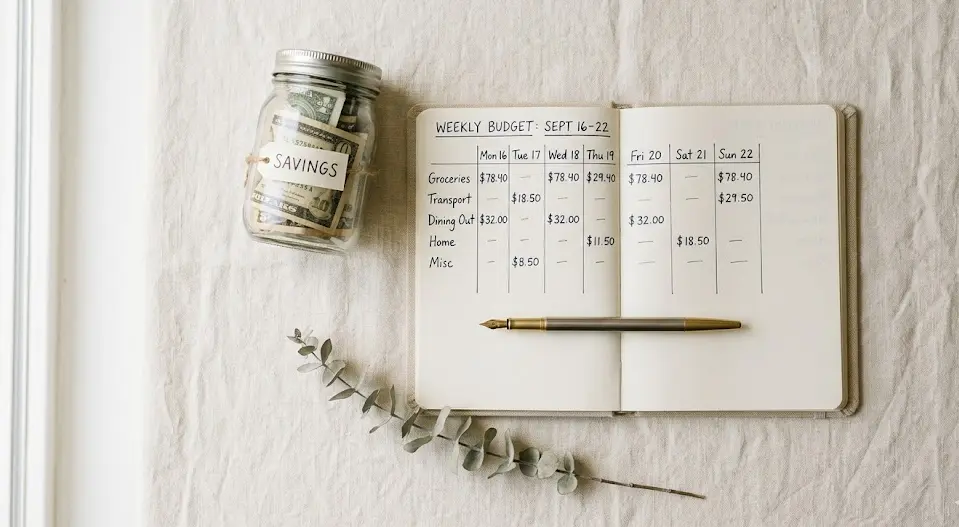
Spending awareness is where most financial change actually begins. Most people who feel like they cannot save are not earning too little. They are operating without visibility. The habit of reviewing transactions once a week, even briefly, creates the kind of awareness that makes change feel obvious rather than forced. When patterns are visible, decisions become clearer. The MoneySmart budget planner includes a spending tracker that works for this purpose at no cost.
Ongoing financial learning has a measurable effect on outcomes. A large body of research, including studies cited by the OECD’s financial literacy programme, links financial literacy to better savings rates, lower debt levels, and more confident investment participation. The habit does not need to be formal. Reading one article per week, listening to a podcast during a commute, or working through a free resource such as the MoneySmart learning hub builds a base of knowledge over time that changes how opportunities are recognised and evaluated.
What People Commonly Do First
-
1A common first step is running a spending audit: downloading three months of bank statements and categorising every transaction to identify patterns. Many people find this single exercise more clarifying than months of budgeting.
-
2People who build strong savings habits often start by automating a small, fixed transfer on the day income arrives, rather than waiting to see what is left. The amount matters less in the early stages than the consistency of the system.
-
3A habit that requires no money at all is blocking fifteen to thirty minutes each week to review finances: what came in, what went out, and whether that reflects stated priorities. Many people treat this as a standing weekly appointment.
-
4Some people who want to build financial knowledge start by working through one structured resource at a time rather than consuming broadly. The MoneySmart website offers free, non-commercial guidance organised by life stage and topic.
-
5A habit that carries significant long-term effect is practising a pause before unplanned purchases: a personal rule such as waiting 48 hours before buying anything above a set amount. Behavioural finance research describes this as a simple and effective friction strategy for reducing impulse spending.
The architecture of a financial life is not built in single moments. It is built in repeated small decisions that become automatic over time.
Waiting for the right strategy, the right income level, or the right moment to start is itself a decision, and it has a cost. Every month without a savings habit, a spending awareness practice, or a basic learning routine is compounding in the wrong direction.
Want to build these habits alongside others working through the same journey?
MSH is a free community built around accountability, goal-setting, and consistent action across wealth, career, network, and health. No ads, no sales pitches.
Join free today